Showing posts with label Finance. Show all posts

Monday, 19 February 2024

OLUWAKEMI AREOLA, DRIVES YOUTH EMPOWERMENT FOR A SUSTAINABLE FUTURE

Vivacity Development, under the visionary leadership of Oluwakemi Areola, a steadfast advocate for youth empowerment, reaffirms its strategic commitment to fostering the growth and potential of young individuals within the green economy. Simultaneously, the organization harnesses Information and Communication Technology (ICT) for Research and Development (R&D), aiming to catalyze innovation and sustainability.


In a world where environmental consciousness is paramount, Oluwakemi Areola, as the Founder and CEO, recognizes the pivotal role of youth in shaping a sustainable future. By placing a strong emphasis on capacity development, the organization aims to equip young people with the essential skills and knowledge needed to excel in the evolving landscape of the green economy.


Key Initiatives:


1. Green Economy Training Programs: Vivacity Development is launching specialized training programs concentrated on the green economy. These initiatives will cover crucial areas such as renewable energy, sustainable agriculture, and environmental conservation, empowering young individuals to contribute to a greener world.


2. ICT Integration for R&D: Embracing the transformative power of technology, Vivacity Development incorporates cutting-edge ICT for Research and Development. This approach aims to foster innovation in sustainable practices, environmental conservation, and eco-friendly solutions.


3. Collaborations with Industry Leaders: Oluwakemi Areola spearheads collaborations with industry leaders in the green economy and ICT sectors. These partnerships offer young participants real-world insights, mentorship, and opportunities to engage in impactful projects.


4. Youth-Led Initiatives: Vivacity Development actively encourages youth-led initiatives by providing a platform for young innovators to showcase their ideas. The organization believes in the potential of the younger generation to drive positive change and, through mentorship and support, aims to amplify their impact.


Oluwakemi expresses enthusiasm about the initiative: _"At Vivacity Development, we believe in the power of youth to shape a sustainable future. By investing in their capacity development and leveraging ICT for R&D, we are fostering a generation of environmentally conscious and innovative leaders. Our commitment to the green economy goes hand-in-hand with our dedication to utilizing technology for research and development. Together, these initiatives empower young individuals to be at the forefront of positive change."_


Vivacity Development invites stakeholders, partners, and the public to join in supporting these initiatives and contributing to a more sustainable and resilient future. The first event for 2024 will be held at the University on Abuja on the 22nd February 2024.


The goal of this project, under Oluwakemi Areola's leadership, is to inspire and catalyze transformative actions that promote sustainable development, enhance workforce readiness for the digital age, and accelerate the transition to a green economy. By fostering interdisciplinary collaboration, promoting best practices, and facilitating capacity building, they seek to create tangible impacts contributing to a more sustainable and prosperous future.


About Vivacity Development:


Vivacity Development is an Abuja-based organization dedicated to empowering youth through capacity development programs. With a focused approach on the green economy and leveraging ICT for R&D, Vivacity Development aims to create a sustainable and innovative future for the younger generation.

Wednesday, 6 December 2023

VIVACITY DEVELOPMENT STEALS THE SPOTLIGHT AT COP 28 SIDE EVENT, EMPOWERING YOUTH AND UNVEILING ECONIGERIA PLEDGE

Vivacity Development, a trailblazer in sustainable initiatives, orchestrated an extraordinary side event during the 28th Conference of the Parties (COP 28), bringing together a distinguished ensemble of dignitaries and handing the reins to the youth for an inspiring occasion.


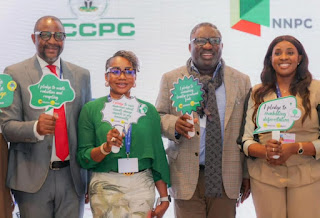
The event which was sponsored by Uganda Airlines showcased the groundbreaking initiative, the "EcoNigeria Pledge: Personal Climate Commitments." With a commitment to engage and empower over 20 million Nigerians, this innovative project encourages individuals from diverse backgrounds to take personalized actions against climate change.


Youth leaders took center stage during the event, steering discussions and initiatives aimed at fostering environmental responsibility. Their active involvement underscored the crucial role young voices play in shaping the future of our planet.


Dignitaries in Attendance:

- Hon Sunday Dare

- Senator Tokunboh Afikuyomi

- Senator Yinus Akintunde

- SAP info and strategy Bayo Onanuga

- SSAP SDGs Adejoke Orelope-Adefulire

- SSAP media Tunde Raman

- Executive Governor Lagos State Babajide Sanwo-Olu (represented)


Featured Speakers:

- Bayo Adams

- AkinWole Omoboriowo

- Kemi Areola

- Titi Oshodi


Key dignitaries present at the side event expressed their support for the EcoNigeria Pledge, recognizing its potential to drive positive change on a national scale. The interactive session allowed attendees to understand the importance of individual contributions in the fight against the climate crisis.


The highlight of the event was the official launch of the EcoNigeria Pledge, where participants were encouraged to make personal commitments to sustainable practices. This pledge serves as a catalyst for building a collective consciousness around environmental responsibility.


Vivacity Development remains steadfast in spearheading initiatives that empower communities and individuals to actively participate in the global effort to combat climate change. The success of this side event at COP 28 marks a significant step forward in the journey toward a sustainable and resilient future for Nigeria and the planet.


For more inquiries, please contact:


Oluwakemi Ann-Melody Areola

ann@Vivacitypr.com


About Vivacity Development:

Vivacity Development is a leading organization dedicated to fostering sustainable practices and environmental stewardship. Through innovative initiatives and collaborative efforts, Vivacity aims to inspire positive change and contribute to a resilient and ecologically conscious future.


https://pledge.vivacitydevelopment.org/

Friday, 1 December 2023

VIVACITY DEVELOPMENT SHINES SPOTLIGHT ON CLIMATE CHANGE AWARENESS AT COP28 WITH CEO KEMI AREOLA AS HOST

Dubai, UAE — Vivacity Development is thrilled to announce its participation in the United Nations Climate Change Conference of Parties (COP28) with a compelling side event hosted by the esteemed CEO, Kemi Areola. The event, scheduled for Monday, December 04, 2023, from 4-6 pm at Expo City, Dubai, UAE (Safe Zone), will focus on "Climate Change Awareness - Nigeria's Action Plan."


Event Overview:

As the world unites to address the pressing issue of climate change, Vivacity Development is proud to contribute with a thought-provoking side event, featuring Kemi Areola as the host. The event aims to raise awareness about climate change, with a specific focus on Nigeria's comprehensive action plan.


Key Details:

- Date: Monday, December 04, 2023

- Time: 4-6 pm

- Location: Expo City, Dubai, UAE (Blue Zone)


Main Topic:

The main theme of the side event revolves around "Climate Change Awareness - Nigeria's Action Plan." This pivotal discussion will illuminate Nigeria's determined efforts in combating climate change, underscoring the importance of global collaboration.


Subtopics:

1. Human Health as It Affects Women and Young People:

Exploring the impact of climate change on the health of women and young people, this subtopic emphasizes the need for targeted strategies and interventions.


2. Adaptation and Resilience Strategies:

Delving into the adaptation and resilience strategies implemented by Nigeria, this subtopic will showcase successful initiatives and lessons learned.


3. Encouraging Individual Action:

Focusing on inspiring and empowering individuals to take action against climate change, this subtopic underscores the role of individual choices and behaviors in creating a sustainable future.


Contact Information:

For further details about the event and participation, please contact:

@Vivacitydevt 

Email: info@vivacitypr.com

www.vivacitydevelopment.org


Vivacity Development's side event at COP28UAE is poised to be a dynamic platform for fostering meaningful discussions on climate change. 

Monday, 20 November 2023

CONSULATE-GENERAL OF THE KINGDOM OF NETHERLANDS IN LAGOS, PARTNERS WITH VIVACITY DEVELOPMENT

The Consulate-General of the Kingdom of Netherlands in Lagos and Vivacity Development are pleased to announce their partnership for Vivacity upcoming side event at Dubai COP 28, focused on Climate Change Awareness: Nigeria's Action Plan. The event is scheduled to take place on December 4th, 2023, at 4pm.


The side event aims to bring together key stakeholders, experts, and policymakers to discuss and highlight Nigeria's action plan in combating climate change. With the theme of Climate Change Awareness, this event will shed light on the urgent need for collaborative efforts to address the challenges posed by climate change and emphasize the importance of sustainable development in Nigeria.


The partnership between the Consulate-General of the Kingdom of Netherlands in Lagos and Vivacity Development signals a shared commitment to addressing climate change and promoting sustainable practices. By joining forces, the two organizations aim to create a platform for knowledge exchange, dialogue, and actionable solutions to mitigate the impacts of climate change in Nigeria.


The event will feature distinguished speakers who are leading authorities in the field of climate change, including representatives from the government, international organizations, academia, and civil society. They will share insights, best practices, and innovative approaches to foster climate resilience and sustainability in Nigeria.


Engr. Oluwakemi Areola, CEO of Vivacity Development, expressed her enthusiasm about the partnership, stating, "We are honored to collaborate with the Consulate-General of the Kingdom of Netherlands in Lagos for this event. By bringing together diverse stakeholders, we can collectively drive positive change and contribute to Nigeria's efforts in combatting climate change."


The Climate Change Awareness: Nigeria's Action Plan side event promises to be an engaging and insightful platform for knowledge sharing, networking, and fostering partnerships. Participants will gain a deeper understanding of Nigeria's climate change challenges, as well as innovative strategies and practical solutions for a sustainable future.


For more information please contact Oluwakemi at @vivacitydevt  


About the Consulate-General of the Kingdom of Netherlands in Lagos:

The Consulate-General of the Kingdom of Netherlands is committed to fostering bilateral relations, promoting sustainable development, and addressing global challenges such as climate change. Through partnerships and collaborations, the Consulate seeks to create meaningful impact and contribute to a more sustainable and resilient future.


About Vivacity Development:

Vivacity Development is a leading organization dedicated to driving sustainable development in Nigeria. Through research, capacity building, and stakeholder engagement, Vivacity Development aims to create positive change and build a resilient future for Nigeria.

Thursday, 9 November 2023

YOUTH AND TECHNOLOGY INSIGHTS UNVEILED BY OLUWAKEMI IN ITV INTERVIEW

Yesterday, CEO Vivacity Engr Oluwakemi Areola had the pleasure of engaging in a dynamic conversation on tech and youth-related matters during this morning's show on Independent Television. The discussion delved into the intersection of technology and the youth demographic, exploring topics that resonate with the current landscape of innovation and societal dynamics.


They explored the role of technology in shaping the experiences of young individuals, discussing how it influences their education, career choices, and overall lifestyles. The conversation highlighted the impact of digital advancements on a wide range of learning methodologies and the importance of empowering the youth with the skills necessary to thrive in an increasingly evolving world.


Additionally, they delved into the challenges faced by the youth in navigating various landscapes, addressing issues such as government engagement, financing, and the need for responsible and ethical communication.stratergies. The discussion aimed to not only acknowledge the opportunities that Nigeria presents but also to foster a deeper understanding of the potential bottlenecks and ways to navigate them successfully.


Throughout the show, Engr Oluwakemi  proffered  potential solutions in various fields, providing her personal perspectives on the evolving relationship between governments and the youth demographic. 


She said 

"By fostering an open dialogue, we aim to bridge the gap between generations, encouraging a mutual understanding of the transformative power of communications and its benefits for the future.'


The viewers had the opportunity to gain valuable insights into the evolving dynamics of the tech-driven world and its impact on the aspirations and challenges faced by the youth. 


She also highlighted that 


"As Nigeria continues to navigate the ever-changing landscape of technology and society, these discussions serve as a crucial platform for fostering awareness, understanding, and collaboration among all generations.'

Saturday, 21 October 2023

DISCOVER THE FUTURE OF CLIMATE CHANGE IN OUR EXCLUSIVE PRE-EVENT WEBINAR

Vivacity Development is excited to announce an exclusive pre-event webinar that will set the stage for our upcoming UAE COP28 Side Event. This informative and engaging session is designed to give participants a glimpse into the exciting world of Climate Change and Nigeria’s Action plan, offering a sneak peek into what to expect from the main event.


Event Details:

Title: Pre-Event Webinar: Climate Change Awareness: Nigeria’s Action Plan


Date: Tuesday 24th October 2023


Time: 2pm


Platform: Zoom


Registration Link: https://bit.ly/VivacityDevt-Cop28-ZoomLink


About the Pre-Event Webinar:

The pre-event webinar is a unique opportunity for participants to gain early insights into the key themes, discussions, and experts that will be featured during the main COP 28 side event set to hold in Dubai, UAE. Our expert speakers will provide valuable perspectives on Nigeria’s Action Plan, share industry trends, and offer a taste of the knowledge and inspiration that await attendees at the full event.


Registration:

Participation in the pre-event webinar is free, but registration is required. To secure your spot and receive access to the event, please register at  https://bit.ly/VivacityDevt-Cop28-ZoomLink


About Vivacity Development 

Vivacity Development is a social enterprise organisation. We are committed to fostering Sustainable Development around the World.


Contact:

For media inquiries or more information about the pre-event webinar, please contact:


Oluwakemi Areola

Vivacity Development 

@vivacitydevt 

+2348137603115


Don't miss this exciting opportunity to get a head start on Climate Change and Nigeria’s Action Plan. Join us for the pre-event webinar to kick off the discussion and be part of the UAE COP28 conversation. We look forward to seeing you there!

NIGERIAN YOUTH ADVOCATES SET TO HOST YOUTH SIDE-EVENT AT COP28 IN DUBAI


Nigerian youth advocates are gearing up to make a powerful impact on the global stage as they prepare to host a significant youth side-event at the upcoming COP28 summit, set to be held in Dubai, UAE.


The event is convened by former Special Assistant on Youth, ICT, and Corporate Relations to the immediate past Minister of Youth and Sports Development, Kemi Areola, and will be organized by Vivacity Development, an organization dedicated to promoting positive change and development.


Areola, who is the CEO of Vivacity PR and Vivacity Development, is at the helm of the initiative. With her wealth of experience and dedication to youth empowerment and climate action, she is set to steer the event towards a brighter future.


According to Areola, the focus of the event is of paramount importance, as it zeroes in on critical issues affecting the African continent, particularly its youth and women, in the context of climate change.


She further stated that the event’s theme, “Climate Change Awareness - Nigeria's Action Plan,” encapsulates the urgency and importance of these topics on the global stage.


Among the topics slated for discussion at the event are: human health as it affects women and young people; adaptation strategies resilience building; and the power of individual actions in the fight against climate change.


"This initiative builds on the success of a previous Nigerian youth side event, which was held in Sharm El Sheikh, Egypt, in November 2022, organized by the Nigerian Ministry of Youth and Sports. The event was aptly tagged  “Youth and Climate Change,” underscoring the pivotal role young individuals play in addressing climate-related challenges,"  Areola emphasized.


"During last year’s youth event, a tree planting project named “Project 250k” was launched, aiming to combat the adverse effects of climate change in Nigeria."


As we approach COP28 in UAE, the Nigerian youth advocates, led by Kemi Areola and supported by Vivacity Development, are poised to drive climate action and awareness to new heights. "Together, they will chart a course towards a more sustainable future, one that acknowledges the importance of Africa’s youth, women, and climate change in shaping our shared destiny.”

Sunday, 12 July 2020

NATIONAL THEATRE REDEVELOPMENT PROJECT: MINISTER COMMENDS PRESIDENT BUHARI ON COMMITMENT TO CREATING OPPORTUNITIES FOR THE YOUTH

The Minister of Youth and Sports Development, Mr Sunday Dare, has praised President Muhammadu Buhari for renewing his commitment to providing opportunities for the Nigerian Youth. He described the President's call for investment in projects that will directly benefit young people as visionary and timely.


The Minister made this known on Sunday July 12th, during his brief remarks at the event to handover the National Theatre, Iganmu, Lagos, to the Central Bank Nigerian (CBN) and the Bankers Committee for its redevelopment into the Lagos Creative and Entertainment Centre.


"Today’s event is another giant step towards strengthening President  Muhammadu Buhari’s commitment to create opportunities for our teeming Youth. For me, this project fits perfectly into his challenge to me to seek out and collaborate with willing partners to keep the Nigerian Youth busy.  The potentials of this four component New National Theatre is massive in job creation for our Youth, talent discovery and development, revenue generation and as an innovation and technology hub.


"With the pandemic still biting hard at our nation and the world at large, this project is a much needed shot in the arm to vaccinate our Youth against the multi-headed challenges of unemployment, criminality and the negative impressions forced on them by the very few unscrupulous individuals, who have chosen a life of crime on the international scale."


The event was attended by the Minister for Information, Culture and Tourism, Alhaji Lai Mohammed; the Governor of Lagos State, Mr. Babajide Sanwo-Olu; the CBN Governor, Mr. Godwin Emefiele; and the Chairman of the Bankers Committee, Mr. Herbert Wigwe.


Mr. Dare thanked the Bankers Committee for their will to invest in the Youth, saying it was worth the risk. He added that the creative industry in Nigeria which is fueled by the energy and imagination of the Youth, is a lucrative venture.


"It is now commonplace to hear music produced by our Youth in shopping malls of Dubai, New York, London, and Moscow amongst other great cities of the world," he said. "In terms of downloads, Nigerian artistes like WizKid and Davido are punching at a global level. From the Royal Albert Hall to 02 Centre in London, to virtually all African capitals, sold out audiences in some cases exceeding 35,000 people have paid premium prices to see these amazing home-grown Nigerian products perform. The value chain they lubricate - from legal specialists, logistics, video/graphic artists, fashion, broadcast engineering and much more - are extensive."


The National Theatre property and the entire land was officially handed over by Alhaji Lai Mohammed since the establishment is under his ministry, which is in a partnership with the Lagos State Government, the Bankers’ Committee and the Ministry of Youth and Sports Development on the project. The project, which is to be completed in 18 - 22 months, would convert the National Theatre to a creative village, with four other pillars, including a pillar for the film industry; one for the music industry, one for fashion and another one for Information Technology.


"One strand that binds the millennial generation is their love for the creative arts and entertainment. These are the lifeblood of the new millennial economy," Mr. Dare said. "Despite the crowded global market, Nigerian Youth have excelled with their music permeating every corner of the globe. They are etching the Nigerian brand in the consciousness of their generational peers, as a country that can produce the very best. For each of the examples given, there are millions amongst our Youth with talents, innovative ideas and skills, who are unable to access much needed technology and credit. They all need their country’s support. That support pipeline is born today.


"The Nigerian Youth represents a critical component in propelling the world towards attaining the sustainable development goals."

Friday, 3 July 2020

OBTAIN CERTIFICATES ACCEPTABLE ALL OVER THE COUNTRY AT CITIZENSHIP AND LEADERSHIP TRAINING CENTRE (CLTC)

The Citizenship and Leadership Training Centre (CLTC) is an initiative of the FG under the Federal Ministry of Youth and Sports established for the training and moulding of responsible and respectable citizens and leaders through Online Courses and Physical Boot camps.


At CLTC, We help people build and develop their capacity to function in a competitive world through our core values and Leadership Training Modules of Character Development, Adventure & Challenge, Compassion, and service as well as Social and Environmental Responsibilities.
At CLTC, we believe that Education is much more fun and effective when it's practical, engaging, applicable, and understandable, hence our simplified and detailed courses.

We are offering five (5) Online Courses this period and they are as follows;

1. Citizenship and Leadership for Executives.

2. Citizenship and Leadership for Corporate Class

3. Leadership and Citizenship for Job-seekers

4. Leadership and Citizenship for Working class

5. Leadership and Citizenship for Students

All our courses are detailed, encompassing, time-effective yet flexible to enable our students understand and be able to apply well to Reality.


For example, The Job Seekers Module develops participants’ capacity of mind, body, and spirit for understanding one’s responsibilities to self, others, and community.

All our online classes are Certified with recognized Certificates acceptable all over the country and beyond.

Over the past years, we have had more than 7 million students and more than 80% feedbacks from this our students which is a testimony to the effectiveness of our Courses.

Contact us today on;
www.cltcacademy.com

Fb page: cltcacademy

IG: @cltcacademy

Twitter: @cltcacademy

Monday, 4 May 2020

MASS SACKING IN BANKS AVERTED AS CBN WADES IN

No bank worker, whether permanent or temporary, will be sacked due to the economic slump occasioned by the current coronavirus pandemic, it was learnt yesterday.
The assurance came from the Central Bank of Nigeria |(CBN) and the Bankers ‘ Committee after their meeting. This came amid earlier warning by the Federal Government to employers against sacking workers during the ongoing COVID-19 pandemic.

The Committee’s decision followed a “Special Meeting,” held on Saturday, which was taken to “help minimise and mitigate the negative impact of the COVID19 pandemic on families and livelihoods.”

Specifically, the Bankers’ Committee, an umbrella body of CBN officials and managing directors of deposit money banks (DMBs), had warned that “no bank in Nigeria shall retrench or lay-off any staff of any cadre (including full-time and part-time).”

The Minister of Labour and Employment, Chris Ngige, had on May Day, said: “Employers will not be encouraged to disengage staff without prerequisite social dialogue and clearance from the Federal Ministry of Labour and Employment.”

Recall that amid speculations of mass sack in the banking industry, and others sectors in the economy, the Trade Union Congress (TUC), had on Thursday, urged the Federal Government to protect workers from “some uncharitable employers,” who planned to make workers victims of COVID-19.

Consequently, the Federal Government had warned employers against sacking workers during the lockdown without prerequisite social dialogue and clearance from the Ministry of Labour and Employment.

In agreement with the government, the Committee also stated: “The express approval of the Central Bank of Nigeria shall be required in the event that it becomes absolutely necessary to lay-off any such staff.”

In a statement yesterday, the CBN and the Bankers Committee said its decision came after a “further review of the implications of the COVID-19 pandemic on the Nigerian banking industry.”

It added that this is even as the Committee is not unmindful of “the issue of the operating costs of banks in view of the disruptions emanating from the global economic difficulties,” while the CBN solicits “the support of all in our collective effort to weather through the economic challenges occasioned by the COVID-19 pandemic.”

The Committee’s decision comes amid controversies over the alleged decision to close over 300 branches of Access Bank nationwide by the management via video conferencing in a town hall meeting with the staff.

It’s Managing Director/Chief Executive, Herbert Wigwe, was quoted to have said the decision, which will involve mass retrenchment, was in a bid to reduce operating costs due to the COVID-19 pandemic, which could affect about 75 per cent of the staff, most of whom are outsourced and are offering “non-essential services.”

But this was vehemently denied by the bank’s spokesperson, Abdul Imoyo, who noted that the branches had already been closed from the onset of the COVID-19 lockdown. He said: “This is not correct. Branches were closed at the onset of the COVID-19 lockdown. As the structure of the lockdown has been relaxed, the branches will be reopened in a phased approach, and with adherence to physical distancing guidelines.

“We advised the public when we closed over 540 branches (60 left to operate) in response to our business continuity plan for a crisis of this nature. This was further buttressed by Lagos State and subsequently the Federal Government’s stay at home or work from home order.”

Reacting on the Bankers’ Committee’s directive, Professor of Finance and Capital Markets at the Nasarawa State University, Keffi, and former Commissioner for Finance Imo State, Uche Uwaleke, described this as a welcome development.He told The Guardian: “The decision is a welcome development in order not to create hardships for workers in that sector considering that government’s COVID-19 mitigation measures are geared towards protecting jobs.

“In any case, the agreement was reached with the Bankers Committee. So, I expect that the CBN and the CEOs of banks must have worked out ways to cushion the rising costs of bank operations and liquidity challenges occasioned by the pandemic.

“In addition to the forbearance package already extended to Deposit Money Banks by the apex Bank, I want to bet that the CBN’s MPC will reduce the Cash Reserve Ratio from the current 27.5 per cent when the members meet later this month.”

Meanwhile, the Association of Senior Staff of Banks, Insurance and Financial Institutions (ASSBIFI), had earlier disclosed of plans to write to the banks tomorrow on the issue of possible lay-offs, which has now been overtaken by the Committee’s warning.

A former ASSBIFI President, Oyinkan Olasanoye, had told The Guardian that while the union envisaged possible branch closures and salary cuts, it would however resist any lay-off without negotiations.

She said: “We will write them officially on Monday on the news making the rounds. We are still making our investigations.“We have discussed with the Minister of Labour and NECA. We know there would be job losses but due process must be followed. If they are closing their branches and transferring them to other branches, we have no problem with that, but if they are shutting down their branches and asking the workers to go, we will not accept that.

“COVID-19 is nobody’s fault. You can’t just close now and tell people to go home. I know that it will have implications but it shouldn’t be immediate.”


SOURCE: GUARDIAN

LAGOS ORDERS MARKETS TO OPEN ON SELECTIVE DATES OVER COVID-19

The Lagos State Government has issued new guidelines for the reopening of markets and shopping malls in the state as part of efforts to curb the spread of the Coronavirus pandemic following Governor Babajide Sanwo-Olu’s announcement of the gradual easing of the lockdown in Lagos from Monday.

The state’s Commissioner for Local Government and Community Affairs, Dr. Wale Ahmed, who disclosed this at a stakeholders’ meeting in Alausa, Ikeja, reiterated that all markets and stores in the various local councils/local council development areas across the metropolis would be allowed to open from 9:00 a.m. till 3:00 p.m. on selected days.

He emphasised that everyone attending these markets and stores would be mandated to observe precautionary measures such as physical distancing and high levels of personal and respiratory hygiene.

In a statement yesterday, Ahmed declared that malls would also be allowed to open with the proviso that stores will maintain a 60 per cent occupancy capacity at any point in time, while also ensuring that a two-metre physical distancing is maintained between a shopper and the next person in the store.

The commissioner maintained that food handlers must also wear face-masks and hand-gloves in markets at all times, directing that shop owners must provide hand sanitisers and wash hands with soap and running water at all entry points, conduct temperature checks on customers and ensure that nobody is exempted from the process.

Ahmed disclosed that stakeholders at a meeting attended by the Iyaloja/President, General Association of Commodity Market Women and Men of Nigeria, Mrs. Folashade Tinubu-Ojo and other major market leaders in the state, unanimously agreed that effective from Monday, May 4, 2020, food sellers and other ware traders should operate on alternate days in all markets across the state, saying: “In essence, those trading in other items and wares apart from food will only be allowed to trade on Mondays, Wednesdays and Fridays, while all food and farm produce sellers will operate on Tuesdays, Thursdays and Saturdays.”

Meanwhile, in readiness for the 2020 rains, which is expected to commence soon and its attendant floods, the Lagos State Emergency Management Agency (LASEMA) and its key stakeholders from relevant industries, have kick-started the flood preparedness plans.

In a statement, Director-General/Chief Executive Officer (CEO) of LASEMA, Dr. Olufemi Okey-Osanyintolu, said to generate adequate and effective mitigation plans against flooding this year with its prediction of high rainfalls, LASEMA had further employed technology to determine the land area of the local councils at high risk of flood.

Okey-Osanyintolu further stated that Lagos State’s re-activeness against flooding was predicated on the agency’s hazard vulnerability analysis, which empirical results determined its vulnerability to flooding in most parts of the state while the vulnerability risk assessment of flood on every part of the state, as a fundamental process in mitigating against flood disaster, helped the agency to provide accurate early warning.


SOURCE: GUARDIAN

Friday, 6 March 2020

PEOPLE THAT STUDY ABROAD ARE USUALLY RATED ABOVE THOSE THAT STUDIED IN NIGERIA’S INDIGENOUS INSTITUTIONS. (MRS. KEMI AREOLA, SA TO THE HONOURABLE MINISTER OF YOUTH AND SPORT DEVELOPMENT)

5th March, 2020
Abuja.
At the event, Open Ukrainian Education Education Days “Study in Ukraine 2020” held at the NAF conference centre, Abuja on 5th March,2020 was graced with presence of delegates from Embassy of Ukraine in the Federal Republic of Nigeria, Nigeria Ministry of Education, Ukrainian State Center for International Education of Ministry of Education and Science of Ukriane, Ministry of Youth and Sports, Ukrainian Chamber of Commerce and Industry in Nigeria, Director of Nigerian-Ukranian Trade House “Newsvit” and partners – Intergraid company in the quest to ease the process of Nigerians interested in studying in Ukraine. Introductory and welcome remark were addressed by Tetyana Mayboroda, Sumy State University Ukraine.

Nigeria population is very youth heavy that will become more relevant in the next 10 to 20years. The quest to build a better Nigeria has gone beyond mere low level of education, youths need to be equipped with solid quality education to compete in the labour market. The rate at which Nigerian students relocate abroad to study has continually been on the increase, every year has witnessed a significant rise in the numbers of students migrating abroad for education; despite the huge costs of financing such moves. The rate at which Nigerian students relocate abroad to study has continually been on the increase due to quality standard of education in developed countries.

Charge d’Affairs of Ukraine to Nigeria Serhii Yushkevych in his words said: “One of the cheapest countries to study in developed countries is Ukraine, you can have a degree with 2000 to 4500 dollars”. Recently, there have been an increase in the population of Nigerians interested in studying in Ukraine. “Ukranian Education Foundation” was purposely set up incase they face any challenges in Ukraine such as combating attacks on Nigeria students and guaranteed safety.

Kemi Areola, Special Assistant ICT And Corporate Relations to The Honourable Minister of Youth and Sports Development, Mr. Sunday Dare: “It has also been observed that employers of labour in Nigeria tend to prefer people who studied abroad, especially in countries with great quality of education. We are not saying that Nigerians quality of education is below par but that we have a fair bit to learn from countries that have educational systems in place for a good number of years longer than Nigeria has. Such people that study abroad are usually rated above those that studied in Nigeria’s indigenous institutions.”

She ended her speech by imploring every youth to consider studying at least a part of their course in abroad.
Studying in Ukraine is subject to scholarship programme to support qualified students financially.  For the purpose of studying in home comfort, their universities offers various online courses says 2nd Secretary Ukrainian Embassy in NIgeria - Bodgan Soltys.

The conference was closed by the signing of Memorandum between Olena Nedryhailo (official representative of UCCI in Nigeria) and Agenla Adamu (partners – Intergraid company) for the creation of Charity organization “Ukranian Education Foundation”.

INTERNATIONAL WOMEN’S DAY: DOLAPO OSINBAJO, ROTIMI AMAECHI TO GRACE VIVACIOUS BALL 4.0 IN SUPPORT OF GIRL CHILD, HOLDS MARCH 8


To commemorate the international women’s day as well as lend a voice to the plight of the girl child in Nigeria, an exclusive event tagged Vivacious Ball 4.0 is set to hold on Sunday, March 8 at the prestigious Federal Palace Hotels, Victoria Island, in Lagos.

“One major issue affecting the girl child today is lack of education. When it comes female genital mutilation, equal opportunities, domestic violence and sexual rights, it all boils down to lack of education. Hence, my team and I are identifying a girl child from each school in different communities who is under privileged to ensure she gets an education to university level and this we hope to sustain”, she added.

The event which will witness advocates, supporters, individuals and organisations is aimed at fostering support for girl child causes in Nigeria beyond. According to the host, Special Assistant on ICT & Corporate Relations to the Minister of Youth and Sports Development, CEO/Public Relations Consultant – Vivacity Public Relations, Oluwakemi Areola, the event is designed to foster sustainable support and empowerment for the girl child and related causes.

Expected in attendance are wife of the vice president of the federal republic of Nigeria, Mrs. Dolapo Osinbajo, Minister for Transportation, Rotimi Amaechi, former governor of Jigawa state, Ibrahim Saminu, CEO, KCN holdings limited, Ken Nwaelena, Turaki. Others Include first Ladies from various states, high ranking women in government and business.


Areola, a passionate crusader and advocate for the girl child, who recently turned 40, also launched her Simply Vivacious outfit, specialised in Ankara jackets, male and female underwears.

Monday, 24 February 2020

SUPPORT FOR THE GIRL CHILD - VIVACIOUS BALL 4.0

Vivacious Ball 4.0 is an exclusive event for advocates, supporters, individuals and organizations aimed at fostering support for girl child causes in Nigeria & beyond.

It will be a fun night of dining, entertainment and socializing with The Who is who in the top industries in Nigeria. There will be a fundraiser/donations/support/sponsors and auctioning of top notch memorabilia and exclusive items on the night.

The whole event is designed to Foster sustainable support and empowerment for the girl child.

THEME: SUPPORT FOR THE GIRL CHILD

We will have in attendance: HIGH RANKING WOMEN IN GOVERNMENT/ TOP WOMEN IN BUSINESS/ INTERNATIONAL WOMEN ORGANIZATIONS, INDIVIDUALS IN SUPPORT ETC

Date: 8TH MARCH, 2020
Time: 2PM RED CARPET:
           3PM -7PM MAIN EVENT

Venue: FEDERAL PALACE HOTEL, 6-8 AHMADU BELLOW WAY, VICTORIA ISLAND, LAGOS.

Take a stand in support of the girl child today! Visit vivaciousball40.vivacitypr.com to find out more.

Tuesday, 21 January 2020

AFRICA HAS A HIGH UNEMPLOYMENT RATE AND SLUGGISH ECONOMIC GROWTH. - MS OLUWAKEMI AREOLA

Speaking at the 1st Afro Entrepreneurship Education Summit in Abuja, Ms Oluwakemi Ann-Melody Areola @vivacitypr said that Entrepreneurship education can be said to focus on the development of skills or attributes that enables the realization of opportunity, where management education is focused on the best way to operate existing hierarchies. Both approaches share an interest in achieving "profit" in some form (which in non-profit organizations or government can take the form of increased services or decreased cost or increased responsiveness to the customer/citizen/client).


Africa has a high unemployment rate and sluggish economic growth. It's time to consider what our academic institutions can do to reduce unemployment and to help the poor - by taking what they do best (education) and applying it to one of the most effective mechanisms for economic growth and empowerment (entrepreneurship).


Africa’s economies are not creating as many jobs as the schools are graduating students. Every year, approximately 11 million young people enter the workforce, competing for approximately 3 million jobs created. The gap of 8 million is wide and growing. Consequently, it takes an average young person up to six years to find their first job.
In order to cope with this reality young people often become entrepreneurs by default, rather than by design. To help these young entrepreneurs to be successful in business, it is important that they receive the tools, skills and knowledge that they need to understand business.


Entrepreneurship is an important avenue for job creation outside the formal economy as well. There is a missing middle in the conversation around entrepreneurship in Nigeria. In order to solve the employment problem in Nigeria, mass entrepreneurship will have to be a significant part of the solution. Given the low levels of investment, there is a significant opportunity to support mass entrepreneurship to provide better jobs and livelihoods to many people.

Friday, 10 January 2020

NIGERIANS MAY PAY MORE FOR DATA, VOICE CALLS IN SOME STATES

Telecom companies acting under the aegis of Association of Licensed Telecoms Operators of Nigeria (ALTON) said they may have no choice but increase tariffs for voice calls and data over the decision of 14 state governments to increase the cost of right of way (RoW) for telecommunication infrastructure.

Association of Licensed Telecoms Operators of Nigeria warned that the regime of discriminatory tariff regime may become inevitable as they operate under different conditions in some states.

Gbenga Adebayo, the chairman, lamented that some states have seen the telecoms sector as a cash cow that should be milked, adding that they come with very spurious taxes, charges, and levies.

But this threat is coming hours after Isa Pantami, minister of Communications and Digital Economy, said he has written to state governors to comply with the national economic council’s (NEC) resolution on the Right of Way.

The states which hiked the levy are Lagos, Kano, Anambra, Ondo, Cross River, Kogi, Osun, Kaduna, Enugu, Adamawa, Ebonyi, Imo, Kebbi, and Gombe.

The RoW charge is the levy paid to state governments for laying of optic fibre on state roads.

At present, the cost of RoW on federal roads is N142 per linear metre.

The 14 states, however, increased RoW fees from between N300-N500 per linear metre to between N3,000-N6,000 per linear metre.

The new management of the Lagos State Infrastructure Maintenance and Regulatory Agency (LASIMRA) increased RoW fee from N500 per linear meter to N5,000 per linear metre.

A single telecom operator needs RoW covering thousands of kilometres.


SOURCE: GUARDIAN

Thursday, 9 January 2020

WORLD BANK PUTS NIGERIA’S GROWTH AT 2.1 PER CENT IN 2020


The World Bank Group, yesterday, raised Nigeria’s growth expectations in 2020 to 2.1 per cent, describing it as an “edge up”, a development that confirms the country’s continued stay in sluggish economic path for another calendar year.

It also warned that the macroeconomic framework is characterised by multiple exchange rates, foreign exchange restrictions, high persistent inflation, and a central bank targeting manifold objectives that are not conducive to confidence.

Meanwhile, the global economic growth is also forecast to edge up to 2.5 per cent in 2020, as investment and trade gradually recover from last year’s significant weakness, but downward risks persist.

The World Bank’s “January 2020 Global Economic Prospects”, however noted that growth among advanced economies as a group is anticipated to slip to 1.4 per cent in 2020, in part due to continued softness in manufacturing.

onomies as a group is anticipated to slip to 1.4 per cent in 2020, in part due to continued softness in manufacturing.


On the other hand, growth in emerging market and developing economies is expected to accelerate this year to 4.1 per cent, though not broad-based, but improved performance of a small group of large economies, some of which are emerging from a period of substantial weakness.

The global institution noted that in Angola, Nigeria, and South Africa- the three largest economies in the region, growth was subdued in 2019, remaining well below historical averages and contracting for a fifth consecutive year on a per capita basis.

Beyond the large economies, growth also deteriorated in several industrial commodity exporters in 2019, as weaker prices and softer demand dampened activity in extractives sectors, such as in the Democratic Republic of Congo, Liberia, and Namibia.

The World Bank Group Vice President for Equitable Growth, Finance and Institutions, Ceyla Pazarbasioglu, said: “With growth in emerging and developing economies likely to remain slow, policymakers should seize the opportunity to undertake structural reforms that boost broad-based growth, which is essential to poverty reduction.

“Steps to improve the business climate, the rule of law, debt management, and productivity can help achieve sustained growth.”

The bank’s Prospects Group Director, Ayhan Kose, added: “Low global interest rates provide only a precarious protection against financial crises. The history of past waves of debt accumulation shows that these waves tend to have unhappy endings.

“In a fragile global environment, policy improvements are critical to minimize the risks associated with the current debt wave.”

Regional growth is expected to pick up to 2.9 per cent in 2020, assuming investor confidence improves in some large economies, energy bottlenecks ease, a pickup in oil production contributes to recovery in oil exporters and robust growth continues among agricultural commodity exporters.

The forecast is weaker than previously expected reflecting softer demand from key trading partners, lower commodity prices, and adverse domestic developments in several countries.

A sharper-than-expected deceleration in major trading partners such as China, the Euro Area, or the United States, would substantially lower export revenues and investment.

A faster-than-expected slowdown in China would cause a sharp fall in commodity prices and, given Sub-Saharan Africa’s heavy reliance on extractive sectors for export and fiscal revenues, weigh heavily on regional activity.

A broad-based rise in government debt has led to sharp increases in interest burdens, crowding out noninterest expenditure and raising concerns about debt sustainability.

Insecurity, conflicts, and insurgencies— particularly in the Sahel—would weigh on economic activity and food security in several economies. Extreme weather events are becoming more frequent as the climate changes, posing a significant downside risk to activity due to the disproportionate role played by agriculture in many economies in the region.

Still, about a third of emerging market and developing economies are projected to decelerate this year due to weaker-than-expected exports and investment.

U.S. growth is forecast to slow to 1.8 per cent this year, reflecting the negative impact of earlier tariff increases and elevated uncertainty. Euro Area growth is projected to slip to a downwardly revised 1 per cent in 2020 amid weak industrial activity.

Downside risks to the global outlook predominate, and their materialization could slow growth substantially. These risks include a re-escalation of trade tensions and trade policy uncertainty, a sharper-than expected downturn in major economies, and financial turmoil in emerging market and developing economies.

Even if the recovery in emerging and developing economy growth takes place as expected, per capita growth would remain well below long-term averages and well below levels necessary to achieve poverty alleviation goals.


SOURCE: GUARDIAN

Thursday, 12 December 2019

FG TO ESTABLISH COMMUNITY MUSEUMS TO BOOST TOURISM – LAI MOHAMMED

The Federal Government has announced plans to establish community museums as part of efforts to ensure that local communities benefit from tourism.

The Minister of Information and Culture, Alhaji Lai Mohammed, announced the plan on Thursday at the ongoing 4th World UNWTO/UNESCO World Conference on Tourism and Culture in Kyoto, Japan.

A statement on the event was made available to newsmen in Abuja by Mr Segun Adeyemi, Special Assistant to the President (Media) Office of the Minister of Information and Culture

”In Nigeria, we observed that tourists stay in big cities when they visit.

‘They visit the museums in the cities where objects gotten from different parts, including the rural areas, are displayed but they hardly go to the rural areas.

”To encourage tourists to visit the rural areas where money spent is quickly reflected in the local economy, we are trying to establish community museums,” the minister said.

According to Mohammed, the government will, in particular, encourage the establishment of palace museums.

”Parts of ancient residencies of traditional rulers and important chiefs are being turned to museums.

‘Thus, we are not limiting museums to big cities. Money spent by tourists while visiting these rustic places stays longer in these areas.

“Lamido Adamawa now has the Fombina Palace museum, just like the Emir of Potiskum has palace museum,” he said.

The Minister said the government, through high-level representation, training of festival managers and the provision of enabling environment, is supporting and promoting festivals and cultural tourism all over the country.

He said the programme would ultimately ensure that local communities benefitted.

The minister said that a national calendar of festivals would soon be unveiled to assist tourists who are coming to Nigeria in planning their visits.

He said that Nigeria has continued to leverage on the areas in which it enjoys a comparative advantage, citing music, movies and fashion as some of such areas.

Mohammed served as one of the panellists at the Ministerial Segment of the conference, dedicated to discussing and exchanging policies and government models impacting the future of cultural tourism.


SOURCE: GUARDIAN

Monday, 25 November 2019

LAGOS STATE EMERGES NIGERIA’S TOP INVESTMENT DESTINATION

Nigeria’s National Bureau of Statistics (NBS) on Monday said Lagos was the country’s top investment destination for the third quarter of 2019.

“By Destination of Investment, Lagos state emerged as the top destination of capital investment in Nigeria in Q3 2019 with $4,976.40 billion,” NBS said in its Q3 capital importation report.

The $4,976.40 billion, NBS said, accounted for 92.71% of the total capital inflow in Q3 2019.

Asides Lagos, Nigeria’s capital city Abuja, Edo, Kaduna, Kano, Ogun and Oyo state also featured in the report.

According to NBS, Abuja attracted $381.19 million investment for the third quarter. Edo, Kaduna and Kano states each attracted less than a million-dollar investment. $0.83 million was reported for Edo State, Kaduna – $0.25 million and Kano – $0.16 million. Rivers State had $0.03 million investment for the quarter.

Ogun State attracted investment of $7 million, while Oyo State attracted $1.7 million.

In total, these Nigerian states attracted $5, 367 billion for 2019 Q3.

Thirty of Nigeria’s thirty-six states did not have any capital investment listed in the report.

The NBS said Nigeria’s total investment inflows dropped by $460m from $5.82bn in the second quarter of this year to $5.36bn in the third quarter of the year.

This is the lowest amount of capital importation received in the year.

SOURCE: GUARDIAN

Sunday, 17 November 2019

CONSTRUCTIVE YOUTH PARTNERSHIP IN THE NIGERIAN PROJECT: A SUSTAINABLE MODEL - MINISTER SUNDAY DARE

CONSTRUCTIVE YOUTH PARTNERSHIP IN THE NIGERIAN PROJECT: A SUSTAINABLE MODEL
BEING A LECTURE BY MR. SUNDAY DARE, HONOURABLE MINISTER OF YOUTH AND SPORTS DEVELOPMENT AT THE 13TH ANNUAL LECTURE OF THE ALUMNI ASSOCIATION OF LADOKE AKINTOLA UNIVERSITY OF TECHNOLOGY, OGBOMOSHO
Protocol
Preamble
I am particularly delighted to be called here on my first outing in Ogbomosho as Minister of the Federal Republic of Nigeria to speak at One of Nigeria’s foremost institutions, Ladoke Akintola University of Technology, LAUTECH.

Ogbomosho for me is home and will always be. But more significantly to be asked to speak about two issues that dominate our lives today- the Youth and Sustainable Development. There can be no better place to interrogate these issues than in the serene academic setting such as provided by the Ladoke Akintola University of Technology.

Nigeria for too long has perched on the cusp of change. It is time it turns the curve to achieve fundamental change.  With the power, prevalence and penetration of digital technology and the boundless technological opportunities it offers, Nigeria indeed gets a chance at transformational change.

Beyond resource endowment, Africa has a bulging youth population that must be the focus of massive investments and a resource to be harnessed.
The massive potential of the Nigerian youth bulge is globally recognized. With a growth rate of 3.5 % per annum this segment represents the fastest growing in the world and will effectively dominate the society completely within the next two decades providing the human resource for critical aspects of the Nigerian state.
The risks are also recognized and becoming increasingly discernable. This administration recognizes this.


It is therefore an avowed priority of Mr President and the present administration to provide the capabilities for the Nigerian youth to thrive and excel, especially in a world that is increasingly integrated and also threatened by factors like Artificial Intelligence.

It flows therefrom that building a constructive youth partnership in the Nigerian project must take cognizance of these developments and trends.  It goes beyond changing the narrative.   It must first deal with the fundamentals of our socio - economic construct and the political will to push through policies that are far reaching. The narrative can begin to change if we infuse sustainability models into every policy, initiative or project.

We will return momentarily to the other ingredients of building a sustainable model in partnership with the Nigerian youth for the Nigerian project.

Conversation around the role of youth in national building has been with us for a while. The popular adage ‘build the youth, build the nation,’ which in reality is the motto of Man O’War lends credence to this assumption, which characterised the atmosphere of the early days of post-independence Nigeria right up to the late seventies. At that time, it was fashionable to be a young person as issues of volunteerism and patriotism, expressed through community service, and many other self-rewarding overtures (most with little or no economic benefit) defined the era and drove the demography. In fact, it was almost criminal not to belong to a voluntary youth organization.
It was a partnership that worked, each person contributing from their little space: government, private sector, civil society and the most important actors being the youth themselves. Somehow along the way, we squandered this opportunity. People became disillusioned and distanced themselves from selfless contributions to nation building. Instead, they make demands on the Nigerian nation.
Several decades now, having turned full circle, there is beginning again a renewed call for the active involvement of youth in rebuilding the Nigerian Project, albeit in a different manner. In the past, physical energy and analogue systems ruled the day. Today, we are in a new era – the digital era; and it will require a different strategy – perhaps digital strategy. Rebuilding the Nigerian Project is not an option; we simply have to find smarter ways of doing that, using more effective and efficient methods. For me, the answer lays in technology and our greatest resource – youth.


INTERROGATION
The operative words in our interrogation today are constructive, Youth, partnership, Nigerian project and sustainability.
The term Constructive connotes ‘having or intended to have a useful or beneficial purpose1.’ While Youth according to the National Youth Policy is defined as persons between the ages of 15 and 29. However, for me, youth is more than a chronological categorization; it is more a social construct that speaks to a phase of transition to adulthood.
Partnership is cooperation to advance mutual interests.  Project: is a collaborative enterprise that is carefully planned to achieve a particular aim.
Contextualized to the topic therefore, the Nigerian Project would presuppose the existence of a project or enterprise that is carefully planned, through individual or collaborative effort involving research or design, to have to achieve a particular aim, including being useful or beneficial to all parties.
From these definitions, a few takeaways come out strongly. The Nigerian Project will require partnership. And we all know that in any partnership, there is always a STAKE. The task therefore is for us to identify what the stake is for each of our partners; and who these partners are? We have identified one side as the youth, but who are the others? Several questions however arise from this: what is the aim? Is there a plan? If there is a plan what is the life span of the plan? Is there a sustainable model? Is there an enterprise?  Are there resources and are those charged with the task of executing qualified for the job at hand? If any or all of these answers is yes, then it takes us to the assumption that there is a Nigerian Project. And if so, then the next question would be ‘what is the Nigerian project? Who is planning or running the enterprise or project? Who is nurturing the enterprise for sustainability?


IS THERE A NIGERIAN PROJECT?

The notion of a Nigerian Project is not new. Development planning in Nigeria can be classified under three eras. These are the Era of Fixed- Term Planning (1962-85), the Era of Rolling Plan (1990-1998), and the New Democratic Dispensation (1999 till date). The Era of Fixed Medium-Term Plan (1962-1985) witnessed four successful plans in Nigeria. These are the First National Development Plan (1962-1968), the Second National Development Plan (1970-1974), the Third National Development Plan (1975-1980) and the Fourth National Development Plan (1981-1985)4.
With the return to democratic governance in Nigeria, the new administration started development planning in 1999 with the initiation of a four-year medium-term plan document, the National Economic Direction (1999-2003). The plan had the primary object of pursuing a strong, virile and broad- based economy with adequate capacity to absorb externally generated shocks.
While being a new plan document, the objectives and policy direction was not significantly different from that to which the country has followed since the introduction of SAP. NEEDS, GREEN REVOLUTION- the list is endless   All described as Nigeria’s plans for prosperity. These plans are normally four-year medium-term plans.   Often times, a period too short to achieve any desirable outcomes.
Expectedly, these plans could not really deliver on their objectives. These failures cannot be entirely attributed to policy failures and ineffectiveness of the employment oriented programmes that were mainstreamed in the successive development plans but to the generality of the entire development plans. They failed to get a majority buy in from the public.  They lacked a long-term sustainable design. Perhaps we could say the components of the Nigerian Project were not effectively communicated to the public, especially young people for ownership.
The Nigerian project demands a huge dose of patriotism and sacrifice. Not just from the leaders but also from the followers. 
Perhaps the tragedy still plaguing us all is this lack of clarity about what the Nigerian Project is.
We all agree that we want Nigeria to be great. However, we differ on how to go about it because a potpourri of factors is contending for preference: religion, ethnicity and tribal affiliations, social status (rich versus the poor); political affiliations. There have been several documentations and debates on how these factors frustrate the driving of the Nigerian dreams. As such, I will work with the assumption that they have formed a baseline for our discussion today and go straight to the crux of the topic.

WHAT CAN YOUNG PEOPLE DO?

Young people can do a lot in and for the Nigerian Project; and in fact, thy ought to be engaged, mobilized and empowered to do that. The first thing youth need to do for the Nigerian Project is to UNDERSTAND and OWN it. All around the world, young people are contributing positively to the development of their communities, demonstrating daily that youth is not a problem to be solved but a resource to be harnessed. Nigeria parades a hugely resourceful and talented youth population. In the coming years the country will rely increasingly upon its youth population to develop smart products and solutions to conquer the challenges and problems of climate change, economic slowdown, unemployment and poverty. Equally by infusing technology into vocational training, a large swath of the youth population can be drawn into vocational business activities.

There are many ways and many things we can do. I will only present a few of my proposals:
In my opinion, sowing the seed of the Nigeria dream will not be at the University level. It must start from childhood because it is at this point that children develop a mental image of who or what they want to become in life. The picture or image they need added to theirs is that of a country which can propel them to achieving that dream.
I pause here to raise a few privatize questions? Is the Nigerian Project a mirage? Is it achievable? Have we started on that journey?
Rebrand the Country.
We must rebrand Nigeria and communicate it in the right way. In rebranding, we must create a deliberate image of the Nigeria we want our young people to invest in; and then take deliberate steps to make that Nigeria work. For instance, if we want a Nigeria that supports innovative ideas, we must put structures in place that helps innovative ideas to flourish irrespective of the person’s gender, political leaning, religion or ethnic affiliation. There must be a transparent system that gives everyone equal opportunities.

That way, young people with ideas will begin to have hope in the Nigerian project, will flourish and invest in birthing creative or innovative ideas that will catapult the country on the path of massive national development.
There is need to reposition the mental reasoning of our youth and economically empower them to satisfy the demands of the modern world. Rebranding Nigeria is one of the veritable tools to achieve this objective. Unless rebranding directs the power and energy of the youth towards academic and productive goals, the country will keep on experiencing social vices, moral and academic degradation.

The role of ICT in re-branding Nigeria is a peculiar one because ICT is a veritable tool for fast and effective mass communication. The impact of ICT in the world today is far reaching and pervades all boundaries and cultural differences. For effective re-branding all components of ICT and at all levels must be deployed in enlightening, training, and encouraging people towards re-branding.

 A SUSTAINABLE MODEL

We have blamed the surge in violent crimes – kidnapping, armed robbery, political thuggery, etc., on poverty and unemployment. It is largely true. Perhaps, there could be another reason – the need for young people to find expression. If it were for reasons of poverty and unemployment, some of them would have probably retired from crime now, having raised sufficient finance to start their enterprises.
So, my recommendations are  – can we have a country that gives everyone a chance to express themselves; can a young photographer have the pathway and platforms to develop a career in photography that helps them to conquer the photo world? I believe the key to the sustainability of the model would depend of a number of factors:
a. Ownership of the Nigerian Project by Young People by promoting and nurturing Youth-led Social Businesses: We must develop strategies to transfer ownership of the Nigerian Project to youth. One of the ways we can do this is through the Concept of Social Businesses. The underlying value to communicate is CARE. Youth must see that Nigeria is a country that CARES for them and for the things that matter to them. And that there is a system of harnessing and redistributing the opportunities for this CARE.

Social and economic entrepreneurship holds special promise for helping to sustain the rebuilding of the Nigerian Project. They have the potential to play significant roles in developing technologies that can help mobilize and engage young people in the rebuilding efforts.

b. De-emphasize the things that divide us (religion, ethnicity, place of origin, etc.) on official documents and transactions: Majority of our youth are millennia. They live most of their lives on the internet, which has broken down boundaries and miniaturized the world into one huge space. Communities are no longer physical entities defined by geographical boundaries but are more social or professional groupings in the virtual world, joined together by interests that transcend religious, ethnic, or even political divides. This means that our youth, who are more citizens of the digital world than they physical world, will connect and interact with themselves irrespective of their physical divides. This effectively gives us a huge opportunity to de-emphasize, and hopefully one day eliminate such divisive identifiers like tribe, religion, LGA, etc. on our official government documents like forms.
While these data are important variables for statistical purposes, they do little to promote the unity of the country, and more importantly, the Nigerian Project. In fact, many at times, when you meet people and introduce yourself as Sunday Emmanuel, the first thing they ask you is, “where are you from?”, the name Sunday Emmanuel having already places you in the religious box marked ‘Christian.’ On the other hand, if you mention your name as Ugo Ajayi Salau, the next question will be ‘Are you a Muslim or Christian?’ what sort of name combination is that? Are you Yoruba or Igbo, all because the three strongest identifiers have found expression in your name!
c. Institute a reward system that honours and promotes Nigerian values that speak to the Nigerian Project: we must keep the young people inspired and focused towards the Nigerian Project. One way to do this is by sustaining a reward system with privileges attached to National Honours (like express access at airports, subsidized hotel lodgings for a period, certain volumes of made-in-Nigeria goods for some period, etc. A virtual Hall of Fame for holders of certain national medals, streets named after such individuals, their plagues telling the story behind such naming. For instance, ‘Abiola Park: this motor park is named after Kareem Abiola, the Taxi driver who returned 18m to his passenger after it was forgotten in his cab.’
When Mr. President appointed me as Minister, he gave me a clear mandate: keep Nigerian youth productively busy!
The next level belongs to the Nigerian youth. Mr. President’s has a new DEEL (D for digital literacy. E for Entrepreneurship. E for Employability. L for Leadership) for the youth; to train and equip Nigerian youth with the skills they need to compete and for national development. The digital revolution offers an unparalleled opportunity to drive a new wave of international economic growth for countries that have hitherto not fully enjoyed the benefits of the global economy.
For instance, at the present rate of increase in the global technology industry, Accenture and Oxford predicts that by 2020, the technology industry will add about 1.3 trillion USD to the world’s economy.  To fully grasp the implication of this new added growth to the global economy, 1.3 trillion USD is the present-day GDP of South Korea – one of the most digitally advanced nations in the world. This study further anticipates economies such as India, Indonesia, Nigeria, Turkey, South Africa who have begun the process of modernizing their economies to be in the fore front of economic greatness.
Nigeria is committed to raising a new tribe of 500,000 tech savvy youth countrywide in the next 2 years who will expand the frontiers of innovation not just in combating climate change, but in agriculture, medicine, education and biosciences. The Ministry recently launched  the Digital Youth Nigeria project, (DY.NG) that will equip our youth with relevant digital skills set and knowledge that will enable them produce digital products, build smart apps and invent tools that will help reverse or slow down the pace of global warming and sustained social economic growth. A collaborative approach between the public and private sector will drive this project.

The Nigeria youth are blazing the trail in very inspiring ways.  There is the 25-year old Nigeria-British born Silas Adekunle, reputed to have built the first gaming robots in the world. With a first-class degree in Robotics from the University of the West of England, he made the Financial Times list of the Top 100 minority ethnic leaders in Technology for 2018. The 2017 deal with Apple Inc. makes him one of the highest paid engineers in the world.
Meet Alonge Adebayo, Nigerian pharmacist, who graduated from Yale in 2016. He won a grand prize money of 100,000 Euros in the Tech Start Up competition among 119 countries. He invented a lifesaving fake drug scanner-Al-hyperspectral platform for Authenticating Drugs- after a near death experience at a younger age. He recently emerged winner of the 2019 BNP Paribas Group Deep Tech Award, known as the Hello Tomorrow deeptech contest.
And just like the Noble Peace Prize winner, Professor Muhammad Yunus, who founded the Grameen Bank and pioneered microfinance and microcredit for entrepreneurs, a Nigerian youth inspired fintech start up online bank called KUDA, reputed to be the first digital online bank in Nigeria. KUDA has raised about $1.6 million and is meeting the needs of millions of youth who want friendly online banking services.
The National Social Investment Program (SIP) by the President Buhari led administration is a pro-poor scheme that provides easy access to financial resources and targets poor youth and women in Nigeria. There is also the Government Enterprise and Empowerment Programme, GEEP, which provides collateral and interest free financial support to businesses at the bottom of the financial pyramid according to the office of the NSIP.
There is N-Power with close to a million beneficiaries.

Nigeria’s document of purpose and plan for the Nigeria Youth is the National Youth Policy. The revised edition of this policy 2019- 2023 has 11 thematic areas focusing on sports, education, science and tech, agriculture, environment, drug abuse, health etc. This is a policy infused with a sustainable plan with linkages among over 10 MDAS. The policy is predicated on education, engagement, empowerment and employment. This is an important component of the Nigerian project.

Conclusion:
If by any stretch I have left you still searching for the Nigerian project, it is because that project is still being constructed in the real sense of the word. The Nigerian project started with our political independence and later translated into national development plans for infrastructural and institutional rationalizations. We did not stay long on this path. We strayed as a country. National ethos was sacrificed on the altar of nepotism, lack of patriotism and rolling petrol wealth. Critical segments of our society were isolated. The Nigerian project was ill fated before it took full flight.
History offers us another opportunity to rebuild from the ruins of the past. From oil, history again offers us another resource - the Youth. By 2030, Nigeria’s greatest resource will no longer be oil but it’s Youth. If you doubt go ask the Asians.
Nigeria must begin to make huge investments in her youth. That should be the true Nigerian project. Bankable investments in education, technology, agriculture and developmental infrastructure that are sustainable.  Investments in our youth now,  will be a wise investment. That to my mind is the Nigerian Project. And it is sustainable.

Thank you for listening.